This is a regional read for the whole Gulf coast of Florida — global wave model with public buoys nearby to sanity-check it. Winds are mixed across the week, so check the day table before picking a session. Confidence reads "rough estimate" for every day shown — treat this as a trend, not a plan.
Board ranges below are each board's full min→max spectrum from the Quivr catalog — the same chart the app draws — and "fits" counts how many of this week's half-day windows a board's wave and power windows overlap. Nothing here is a guess about a particular beach.
Estimates come from a global ocean wave model sampled offshore and translated into ranges. Actual size varies from beach to beach along this stretch; sheltered spots run smaller. Reads describe the whole region, not one break. Reads are refreshed weekly on this page and several times a day in the Quivr app, which also matches each day against the boards in your own quiver. Notes on this week's data: The main swell comes from the north — a direction this coast is largely shielded from. Size is a rough guess and likely smaller than open-ocean numbers suggest. The main swell comes from the east — a direction this coast is largely shielded from. Size is a rough guess and likely smaller than open-ocean numbers suggest. The main swell comes from the SSE — a direction this coast is largely shielded from. Size is a rough guess and likely smaller than open-ocean numbers suggest. The main swell arrives from the NW at an angle to this coast, so expect the smaller end of the range on most beaches. Most of the wave energy is local wind chop rather than swell — expect a disorganised, weak surface. "Where to look" compares break types in general, not spots — we don't know where the points, reefs or sandbars are, and we have no tide data, which matters most for points and reefs. The main swell arrives from the WNW at an angle to this coast, so expect the smaller end of the range on most beaches. The main swell comes from the NNW — a direction this coast is largely shielded from. Size is a rough guess and likely smaller than open-ocean numbers suggest. The main swell comes from the ENE — a direction this coast is largely shielded from. Size is a rough guess and likely smaller than open-ocean numbers suggest. The main swell comes from the SE — a direction this coast is largely shielded from. Size is a rough guess and likely smaller than open-ocean numbers suggest.
Day by day: Nov 11–17, 2026
Morning is 6am–noon, afternoon is noon–7pm local. Words come straight from the regional read; "No data" means the wave model had no hours for that window.
| Day | Morning | Afternoon | Confidence |
|---|---|---|---|
| Wed Nov 11 | Flat to ankle-high · mellow, not much power · light wind | Flat to ankle-high · mellow, not much power · light cross-shore wind | Rough estimate |
| Thu Nov 12 | Flat to ankle-high · mellow, not much power · light onshore wind | Flat to ankle-high · mellow, not much power · light onshore wind | Reasonable estimate |
| Fri Nov 13 | Waist-high · mellow, not much power · moderate cross-shore wind — some texture | Knee- to waist-high · mellow, not much power · moderate cross-shore wind — some texture | Rough estimate |
| Sat Nov 14 | Knee- to waist-high · mellow, not much power · moderate cross-shore wind — some texture | Knee- to waist-high · mellow, not much power · moderate cross-shore wind — some texture | Rough estimate |
| Sun Nov 15 | Up to knee-high · mellow, not much power · moderate offshore wind | Up to knee-high · mellow, not much power · moderate offshore wind | Trend only |
| Mon Nov 16 | Up to knee-high · mellow, not much power · strong offshore wind | Up to knee-high · mellow, not much power · strong offshore wind | Trend only |
| Tue Nov 17 | Up to knee-high · mellow, not much power · strong offshore wind | Up to knee-high · mellow, not much power · strong offshore wind | Trend only |
Boards that fit the Gulf coast of Florida this week
| Board | Fits | Wave size | Power | Skill |
|---|---|---|---|---|
| Bing BEACON | 14 of 14 windows | Knee-high → chest-high | Soft | Beginner-friendly |
| Bing GLIDER | 14 of 14 windows | Knee-high → chest-high | Soft | Beginner-friendly to intermediate |
| Catch Surf Log | 14 of 14 windows | Knee-high → chest-high | Soft | Beginner-friendly |
| Channel Islands CI Noserider | 14 of 14 windows | Knee-high → chest-high | Soft | Beginner-friendly to advanced |
| Channel Islands The Water Hog | 14 of 14 windows | Knee-high → chest-high | Soft | Beginner-friendly to intermediate |
| Christenson C-Hag | 14 of 14 windows | Knee-high → chest-high | Soft | Beginner-friendly to intermediate |
| Christenson Chris Craft | 14 of 14 windows | Knee-high → chest-high | Soft | Beginner-friendly to intermediate |
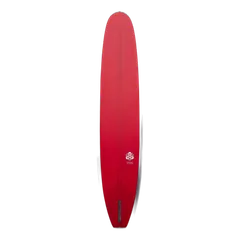
The picks, in order
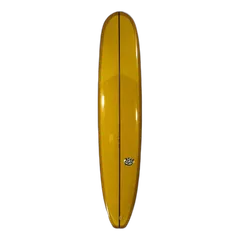
1. Bing BEACON
Bing BEACON runs knee-high to chest-high; that wave window overlaps every one of the 14 half-day windows we have data for this week. Its soft power midpoint sits close to the week's typical push. A longboard with a beginner-friendly skill window.
Quivr catalog read: This board features a wide nose and a pulled-in tail, making it suitable for surfers of all skill levels.
Category: Longboard · Pulled-in tail · Catalog ability: beginner
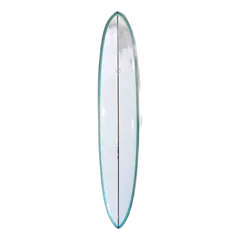
2. Bing GLIDER
Bing GLIDER runs knee-high to chest-high; that wave window overlaps every one of the 14 half-day windows we have data for this week. Its soft power midpoint sits close to the week's typical push. A longboard with a beginner-friendly to intermediate skill window.
Quivr catalog read: The Bing Glider offers a smooth and continuous ride with refined curves for effortless gliding.
Category: Longboard · Catalog ability: beginner
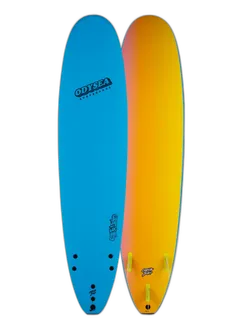
3. Catch Surf Log
Catch Surf Log runs knee-high to chest-high; that wave window overlaps every one of the 14 half-day windows we have data for this week. Its soft power midpoint sits close to the week's typical push. A longboard with a beginner-friendly skill window.
Quivr catalog read: The Catch Surf Log is a fun, high-float longboard that excels in small to moderate surf conditions.
Category: Longboard · Catalog ability: beginner · 3.5★ from 2 Quivr ratings
4. Channel Islands CI Noserider
Channel Islands CI Noserider runs knee-high to chest-high; that wave window overlaps every one of the 14 half-day windows we have data for this week. Its soft power midpoint sits close to the week's typical push. A longboard with a beginner-friendly to advanced skill window.
Quivr catalog read: The CI Noserider is designed for traditional noseriding, making it ideal for surfers who want to maximize their time on the nose while still being able to maneuver off the tail.
Category: Longboard · Catalog ability: intermediate
5. Channel Islands The Water Hog
Channel Islands The Water Hog runs knee-high to chest-high; that wave window overlaps every one of the 14 half-day windows we have data for this week. Its soft power midpoint sits close to the week's typical push. A longboard with a beginner-friendly to intermediate skill window.
Quivr catalog read: The Water Hog is a versatile mini-longboard that excels in a variety of conditions.
Category: Longboard · Catalog ability: intermediate
6. Christenson C-Hag
Christenson C-Hag runs knee-high to chest-high; that wave window overlaps every one of the 14 half-day windows we have data for this week. Its soft power midpoint sits close to the week's typical push. A longboard with a beginner-friendly to intermediate skill window.
Quivr catalog read: The Christenson C-Hag is a versatile longboard that excels in various conditions, providing stability and ease of paddling.
Category: Longboard · Catalog ability: intermediate
7. Christenson Chris Craft
Christenson Chris Craft runs knee-high to chest-high; that wave window overlaps every one of the 14 half-day windows we have data for this week. Its soft power midpoint sits close to the week's typical push. A longboard with a beginner-friendly to intermediate skill window.
Quivr catalog read: The Chris Craft is designed for smooth cruising on reefs and points, offering a stable ride with a classic longboard feel.
Category: Longboard · Square tail · Catalog ability: intermediate
Best fit by shape this week
One board per shape, chosen by how many of this week's 14 windows its wave and power windows overlap. Only shapes that overlap at least half the week are listed.
| Shape | Board | Fits | Wave size | Power |
|---|---|---|---|---|
| Shortboard | Channel Islands #4 | 14 of 14 windows | Knee-high → chest-high | Soft |
| Groveler | Paragon Surfboards Mint Chip Foamy | 14 of 14 windows | Knee-high → chest-high | Soft |
| Fish | Aipa Da Buttz | 14 of 14 windows | Knee-high → chest-high | Soft |
| Twin fin | Lost / Mayhem RNF Twinzer | 14 of 14 windows | Knee-high → chest-high | Soft |
| Midlength | Walden Surfboards Mini Magic | 14 of 14 windows | Knee-high → chest-high | Soft |
| Longboard | Bing BEACON | 14 of 14 windows | Knee-high → chest-high | Soft |
What this week asks of a board on the Gulf coast of Florida
Nothing in this week's read gets past waist-high. Paddle speed and glide matter more than hold — boards whose wave window starts low (knee-high) will see far more rideable sessions than anything built for a step.
Most windows read "mellow, not much power" for push. A board's power midpoint tells you where it will feel alive: mellower boards on the softer windows, firmer boards when the push is there. The table shows each board's own midpoint so the call is yours.
Already own one of these?
Add it to your quiver in Quivr and the Home tab does this matching for you — every day, against your own boards, for the coast you pick. If none of your boards overlap a window, it says so rather than forcing a pick.
Shopping instead? Open two of the picks above in Compare and read the low end of the wave-size range first — on a flat to ankle-high week that decides whether a board gets used.
Compare these picks head to head
Live Quivr comparison pages for pairs in this list — same spectra, side by side:
FAQ
How big will the surf be on the Gulf coast of Florida this week?
Across Nov 11–17, 2026 the regional read runs up to waist-high. The most size shows Fri Nov 13 morning, waist-high (rough estimate); the smallest window is Thu Nov 12 morning, flat to ankle-high. Confidence reads "rough estimate" for every day shown — treat this as a trend, not a plan. Sheltered beaches along this stretch run smaller than the read.
Which surfboards fit the Gulf coast of Florida this week?
BEACON, GLIDER, Log overlap the most of this week's 14 surf windows on catalog wave-size and power spectra; the shapes that fit best are longboard. Open any of them in Quivr to see the full range chart and compare two side by side.
Which day has the most size on the Gulf coast of Florida?
Fri Nov 13 morning, waist-high (rough estimate). Size builds Thu, Fri and Tue and eases Sun. Winds are mixed across the week, so check the day table before picking a session.
Does this apply to my exact spot?
No single spot is named or predicted here. The read describes the Gulf coast of Florida as a whole — a stretch of coast facing roughly the same direction. Estimates come from a global ocean wave model sampled offshore and translated into ranges. Actual size varies from beach to beach along this stretch; sheltered spots run smaller. Reads describe the whole region, not one break.
How often is this page updated?
Every week, with the same seven-day regional read the Quivr app shows on its Home tab. The app refreshes several times a day and also tells you which board in your own quiver fits each day.